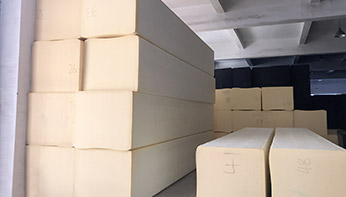



High-Density vs. Low-Density Foam Sheets: A Comprehensive Guide to Choosing the Right Grade for Industrial Sealing
Executive Summary: Choosing the right foam density — whether it’s High-Density EPDM Sheet, EVA Foam Sheet, or PE Foam Block — is the difference between a seal that lasts decades and one that fails in weeks. This guide breaks down the technical trade-offs for industrial sealing applications.
What Does Foam Density Actually Mean?
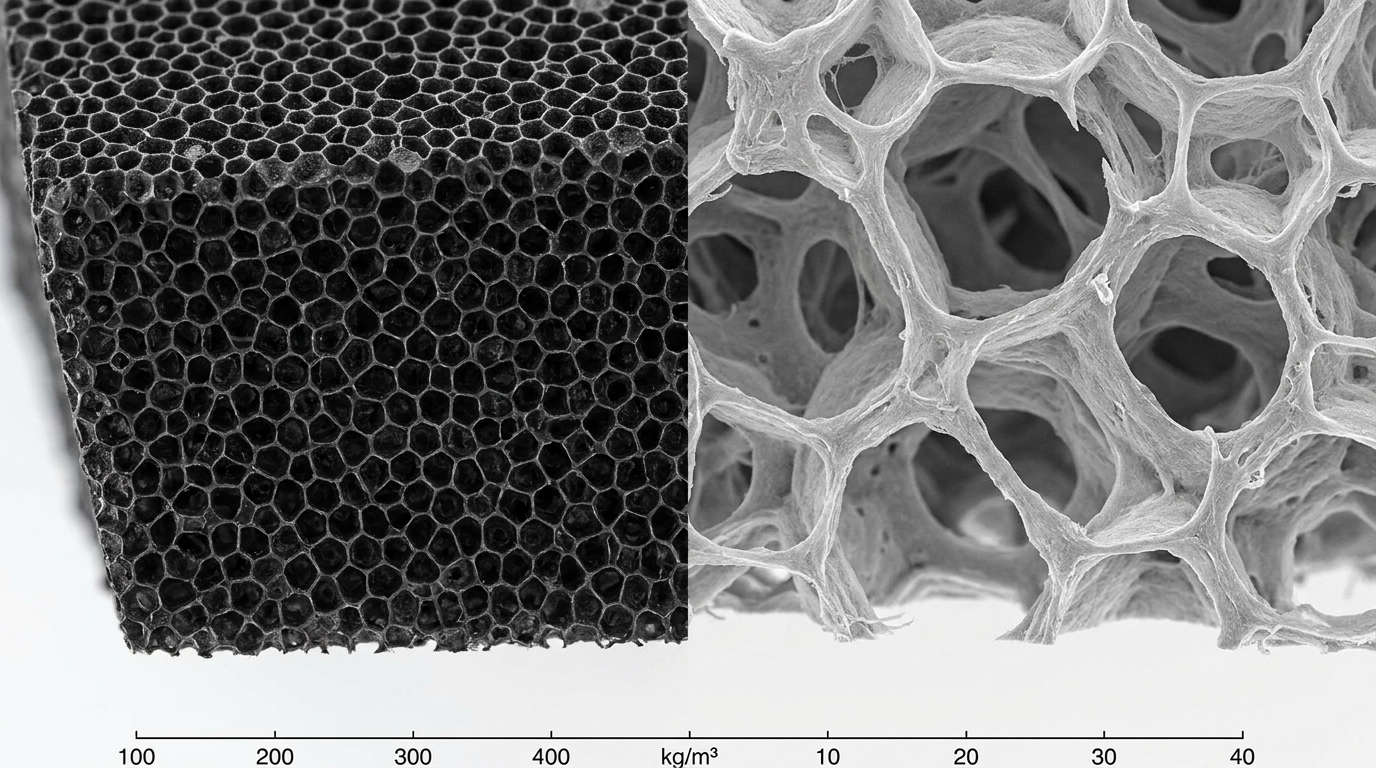
Density is the mass of the foam per unit volume (typically in kg/m³). It is the primary indicator of the Cell Structure — how compact the polymer is bonded together.
Low-Density Foam: Larger open cells, softer, lighter weight. Best for cushioning.
High-Density Foam: Tightly packed closed cells, superior Compression Set Resistance. Best for sealing.
1. High-Density EPDM Sheet: The Powerhouse for Industrial Sealing
Best for: Automotive Gaskets, HVAC Sealing, Construction Joints.
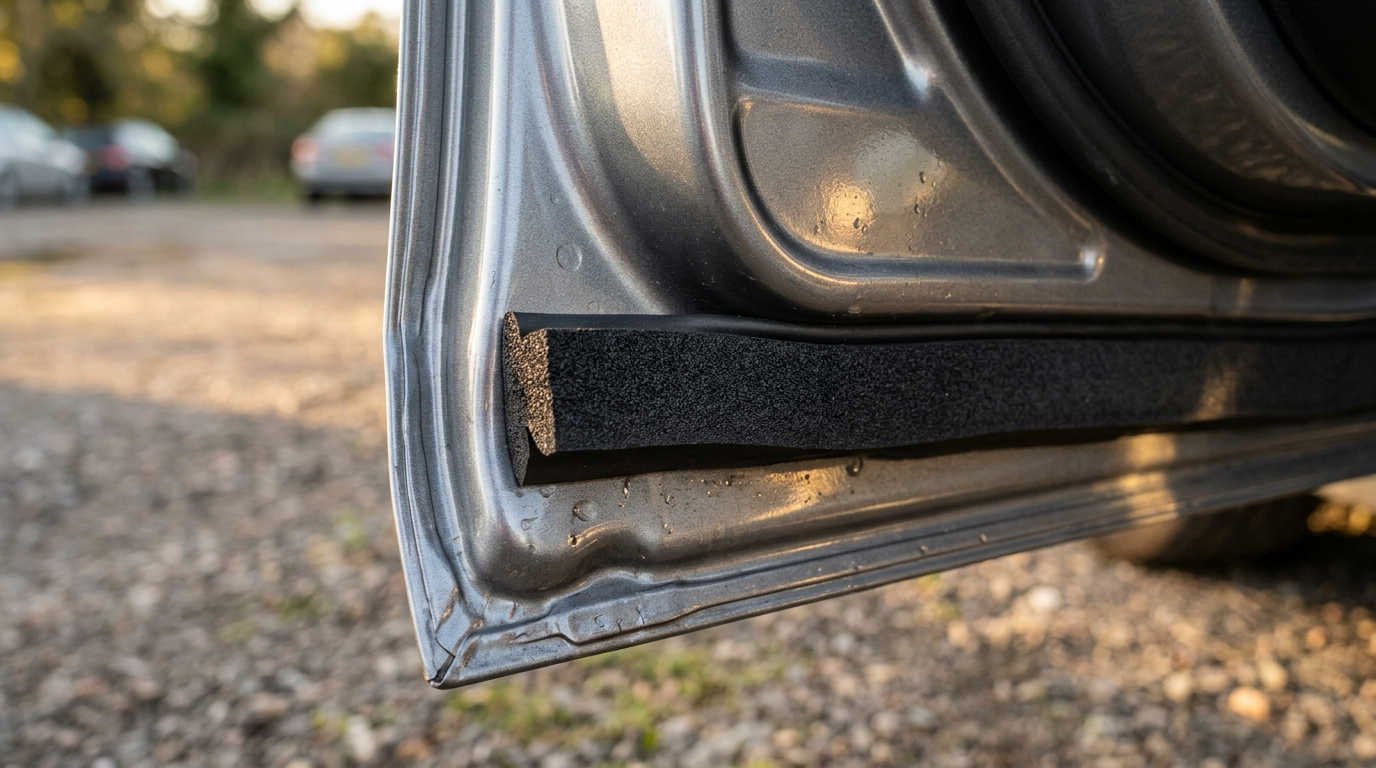
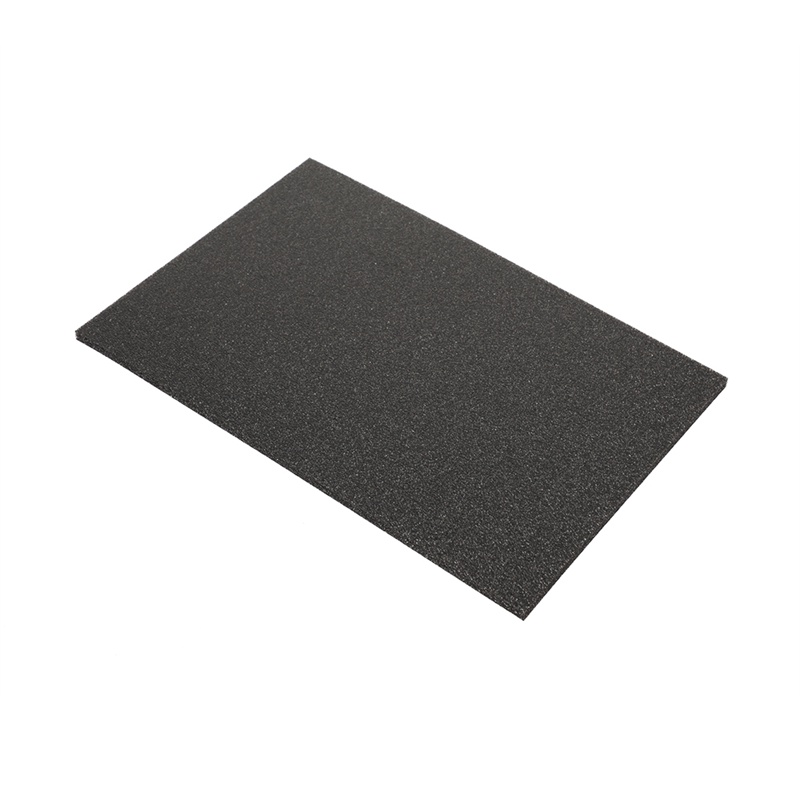
A High-Density EPDM Sheet (typically >60 kg/m³) is the gold standard for outdoor and high-pressure applications. Its tight Cell Structure ensures the material maintains its integrity under constant load.
Critical Technical Advantages:
Superior Compression Set Resistance: Less than 25% deformation after 22 hours at 70°C — meaning your seal stays tight for years.
Excellent UV & Ozone Resistance: EPDM does not crack or degrade under sunlight, making it ideal for outdoor enclosures.
Vibration Damping: The dense mass effectively absorbs low-frequency vibrations in heavy machinery applications.
Wide Temperature Range: Stable performance from -40°C to +120°C.
2. EVA Foam Sheet & PE Foam Block: Versatility and Cushioning
Best for: Protective Packaging, Tool Inserts, Lightweight Insulation.
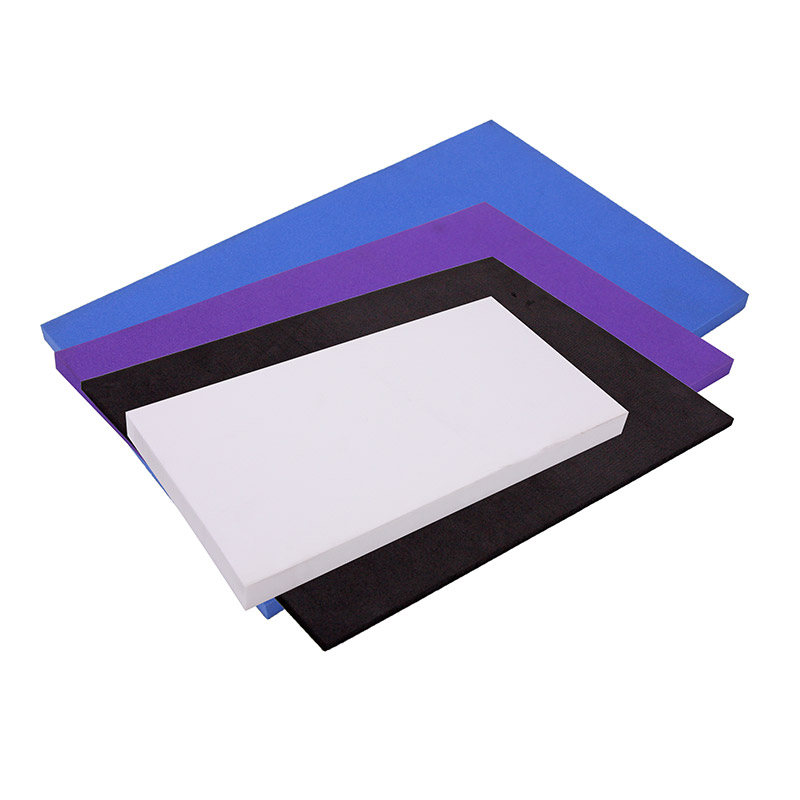
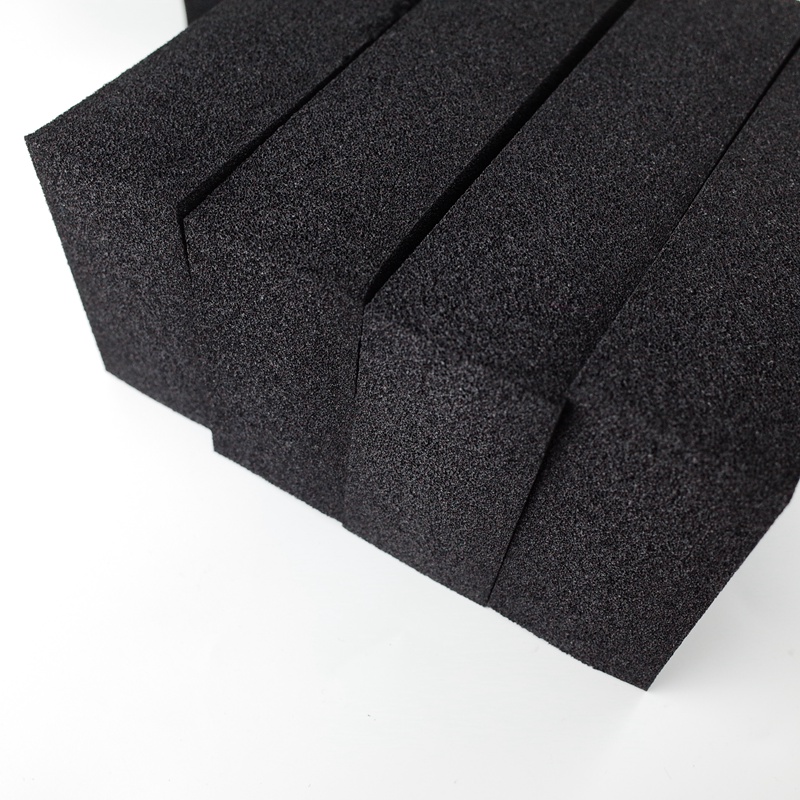
An EVA Foam Sheet offers a unique balance of softness and impact absorption, while a low-density PE Foam Block excels in cost-effective, lightweight cushioning.
Key Performance Advantages:
Closed-Cell Structure: Both EVA and PE feature closed cells that resist water absorption.
Impact Absorption: EVA's elasticity makes it superior for tool tray inserts and sporting goods.
Chemical Inertness: PE Foam Blocks resist most industrial chemicals and solvents.
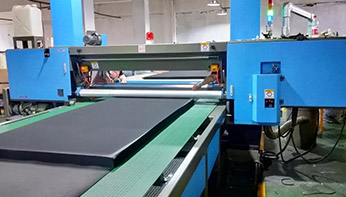
Easy Fabrication: Simple to die-cut, laminate, and CNC-route for custom shapes.
3. Large Format Capability: 1220x2440mm Foam Sheets
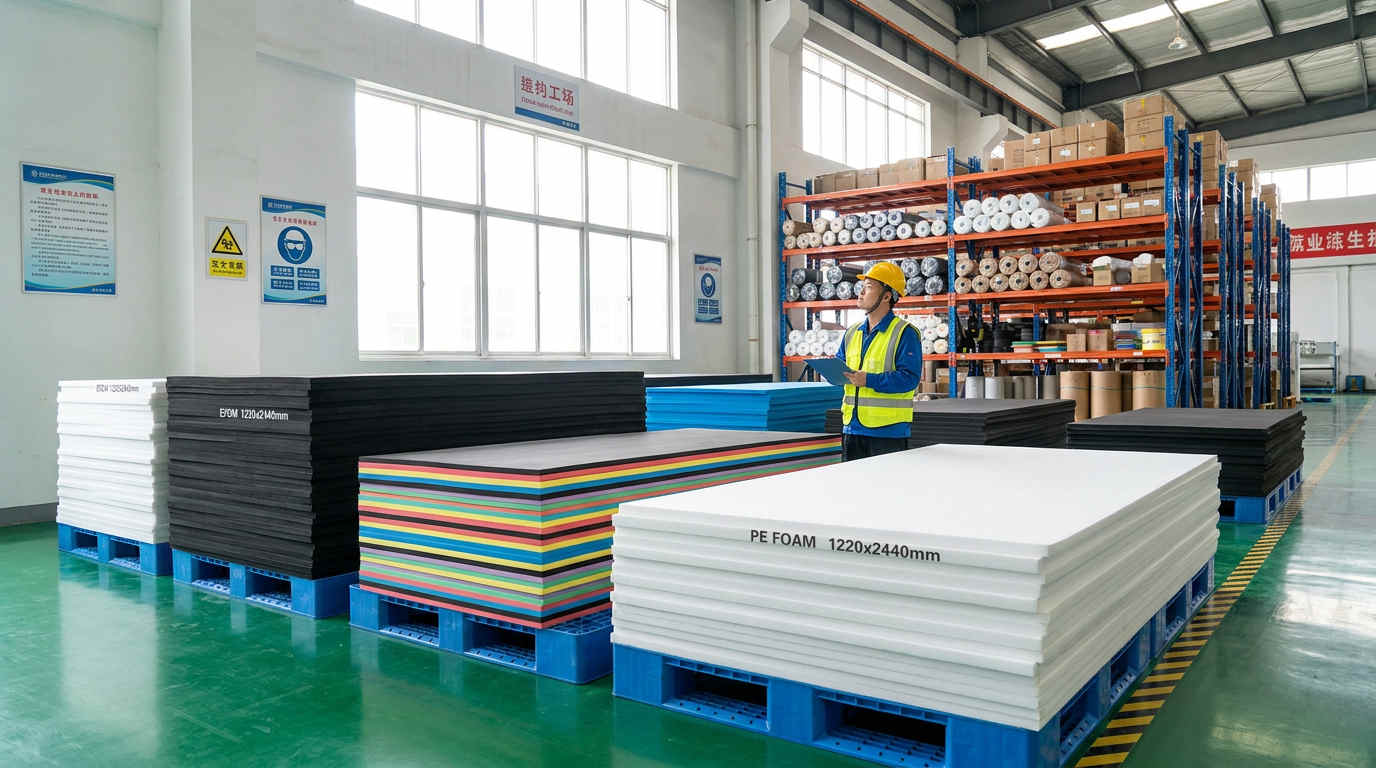
Beyond density, sheet size is a critical factor for industrial buyers. Our 1220x2440mm Foam Sheets (4ft x 8ft) eliminate the need for seams and joints in large-scale projects, ensuring uniform sealing performance across construction panels, marine flooring, and oversized packaging inserts.
This large-format capability — available in EPDM, EVA, and PE — is a game-changer for buyers tired of patching smaller sheets together.
4. Material Comparison Matrix
| Material | Key Property | Density Range | Best Application |
|---|---|---|---|
| High-Density EPDM Sheet | UV & Ozone Resistance | 60 - 150 kg/m³ | Outdoor Seals, Auto Gaskets |
| EVA Foam Sheet | Impact Absorption | 30 - 120 kg/m³ | Tool Trays, Packaging |
| PE Foam Block | Chemical Resistance | 25 - 100 kg/m³ | Construction, Insulation |
Need Custom Foam Sheets up to 1220x2440mm?
We specialize in precision-cut EPDM, EVA, and PE Foam Blocks with verified Compression Set Resistance data for engineering specs.
Get a Free Material Sample & Technical Datasheet