EPDM vs Neoprene vs NBR Foam: How to Select the Right Material
EPDM, Neoprene and NBR foam are widely used for sealing, insulation, cushioning and vibration control. Although they may look similar, each material responds differently to weather, water, oil and long-term compression.
The simple rule is: choose EPDM for outdoor weathering, Neoprene for balanced general-purpose performance, and NBR for contact with petroleum oils and fuels. The final choice should still be confirmed against the actual temperature, fluid, compression and test requirements.
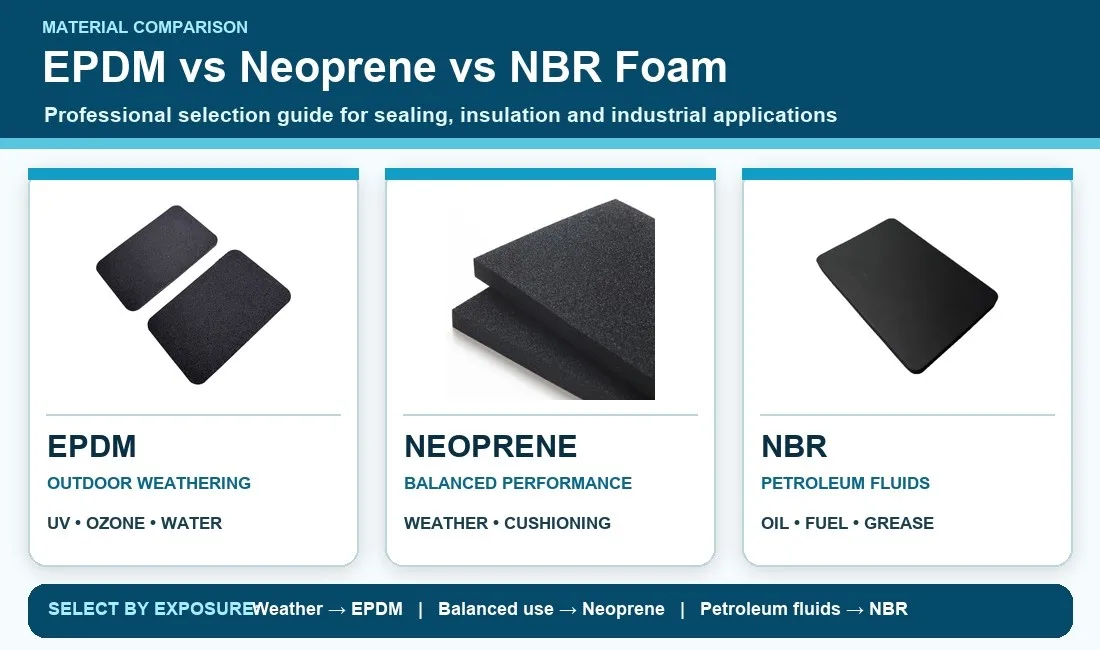
EPDM vs Neoprene vs NBR Foam at a Glance
| Material | Main Strength | Typical Applications | Key Limitation |
|---|---|---|---|
| EPDM Foam | Excellent resistance to ozone, UV, weather and water | Outdoor gaskets, HVAC seals, construction joints and enclosure seals | Generally unsuitable for petroleum oils and fuels |
| Neoprene Foam | Balanced weather resistance, cushioning and moderate oil resistance | General gaskets, equipment pads, protective parts and vibration damping | Does not match NBR for oil resistance or EPDM for demanding outdoor exposure |
| NBR Foam | Strong resistance to petroleum oils, fuels and greases | Machinery seals, automotive components and industrial insulation | Standard grades are less suitable for prolonged UV and ozone exposure |
When Should You Choose EPDM Foam?
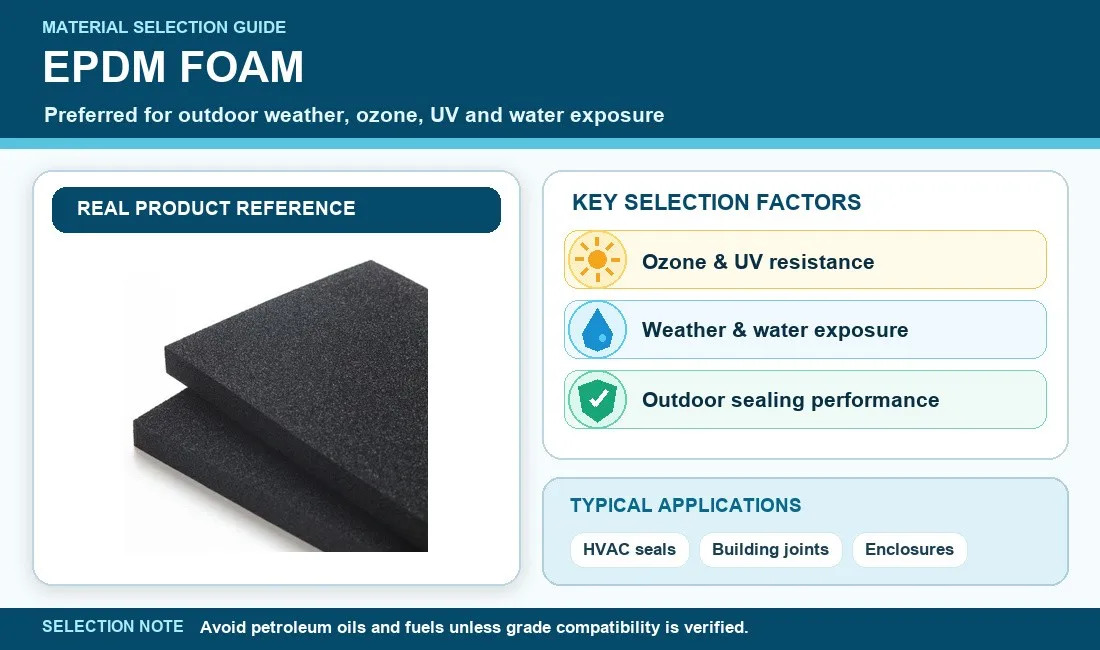
EPDM is usually the first choice for outdoor or moisture-exposed sealing. Its resistance to sunlight, ozone and weathering makes it suitable for building joints, exterior enclosures, HVAC systems and door or window seals.
ExxonMobil's EPDM technical overview highlights resistance to ozone, UV, water and polar fluids. However, EPDM should not be selected for regular contact with petroleum-based oil or fuel without compatibility testing.
View Dengyue Sponge's closed-cell and open-cell EPDM foam.
When Should You Choose Neoprene Foam?
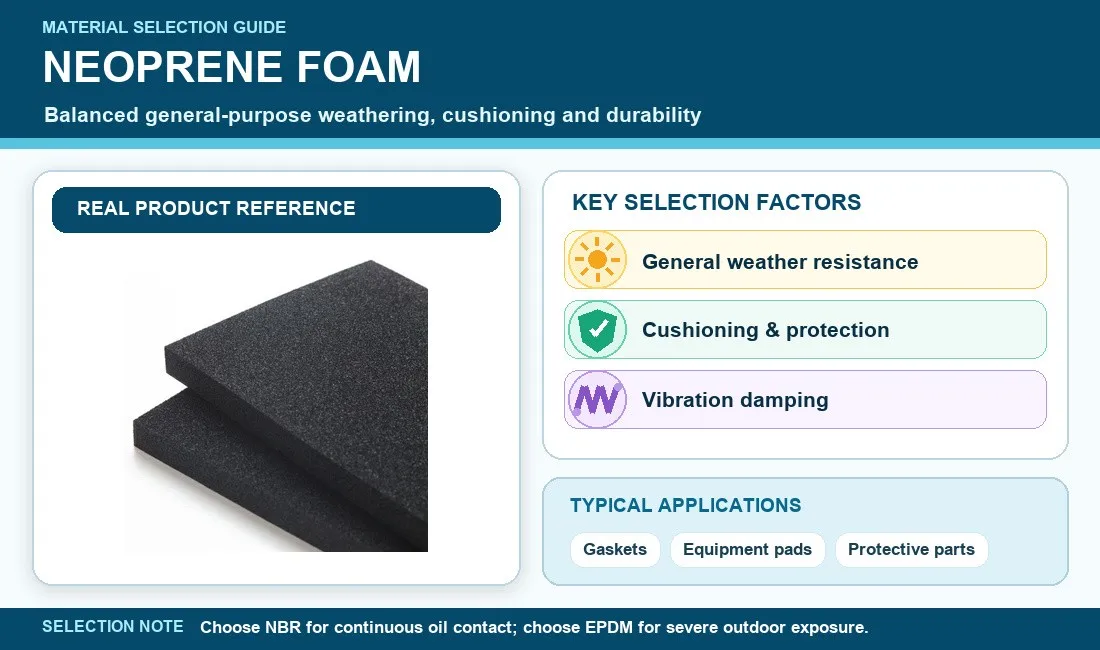
Neoprene is a practical general-purpose option when several moderate requirements must be balanced. It offers good weather resistance, useful mechanical durability and better oil resistance than EPDM in many applications.
Typical uses include industrial gaskets, anti-vibration pads, equipment seals and protective components. For continuous oil contact, NBR is usually more suitable; for severe outdoor exposure, EPDM normally provides a stronger weathering margin.
See Dengyue Sponge's heat-insulation Neoprene foam.
When Should You Choose NBR Foam?
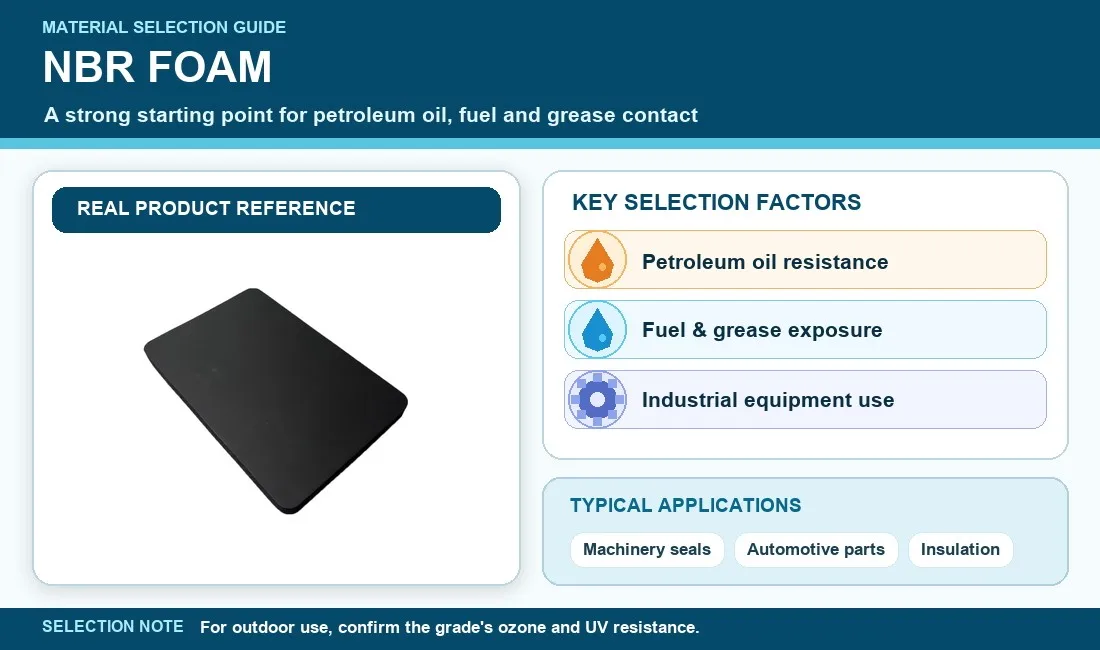
NBR is preferred when the foam may contact lubricating oil, fuel or grease. It is commonly used around machinery, automotive components and industrial equipment where resistance to petroleum-based fluids is the main requirement.
NBR formulations can vary, so buyers should confirm the exact fluid, exposure time and operating temperature. For outdoor applications, ozone and UV resistance should also be checked.
Explore Dengyue Sponge's NBR foam sheet and NBR rubber foam strip.
How to Select the Right Material
Identify the exposure: outdoor weather, water, oil, fuel, chemicals or a combination.
Choose the cell structure: closed-cell foam is generally preferred for sealing and water resistance; open-cell foam is more suitable for sound absorption, filtration and low-pressure closure.
Define compression: confirm thickness, compression-deflection and recovery requirements.
Check temperature and standards: request data for the exact grade rather than applying one universal range to all formulations.
Test the finished part: verify the foam, adhesive, substrate and installation conditions together.
ASTM D1056 is commonly referenced for classifying flexible cellular rubber by type, class and grade. Project requirements should identify the applicable test method and acceptance criteria.
Frequently Asked Questions
Which foam is best for outdoor gaskets?
EPDM is generally the preferred starting point because of its resistance to ozone, UV, moisture and weathering.
Which foam is best for oil resistance?
NBR is usually preferred for petroleum oils, fuels and greases, subject to grade-specific compatibility testing.
Can Neoprene foam be used outdoors?
Yes. Neoprene offers good general weather resistance, although EPDM is normally favored for more demanding long-term outdoor exposure.
Is closed-cell foam always better for sealing?
Closed-cell foam is generally better for air and water sealing, while open-cell foam is easier to compress for dust sealing and acoustic applications.
Can one temperature range apply to all three materials?
No. Temperature capability depends on formulation, density, thickness, exposure time and the required test method.
Final Selection Guide
Choose EPDM for outdoor weather, ozone, UV and water exposure.
Choose Neoprene for balanced general-purpose sealing and cushioning.
Choose NBR for petroleum oil, fuel and grease resistance.
Dengyue Sponge supplies customizable foam sheets, strips, tapes, gaskets and fabricated components. Browse our foam material range or contact us with your application, dimensions and operating conditions for material confirmation and sampling.
Technical note: Material performance varies by formulation and service conditions. Final approval should be based on the current technical datasheet, required certifications and application testing.